How Much Does an EV Charger Installation Involve?
Home EV charging is far faster and safer than a standard power point. Here's what actually goes into a properly installed Level 2 charger for a Wanneroo home.
Why a dedicated charger beats a standard power point
Plugging an EV into a standard 10A garage power point works, but it's slow — typically adding only around 10 to 12 kilometres of range per hour. A dedicated Level 2 home charger running on its own circuit can deliver 7.4kW on single phase, adding roughly 40 to 50 kilometres of range per hour, or up to 22kW on three phase for vehicles that support it.
More importantly, a dedicated charger is installed on its own circuit with correctly sized cable, a dedicated circuit breaker, and Type B RCD protection. That protects both your vehicle and your home's wiring from the sustained high current that EV charging draws for hours at a time.
The switchboard assessment comes first
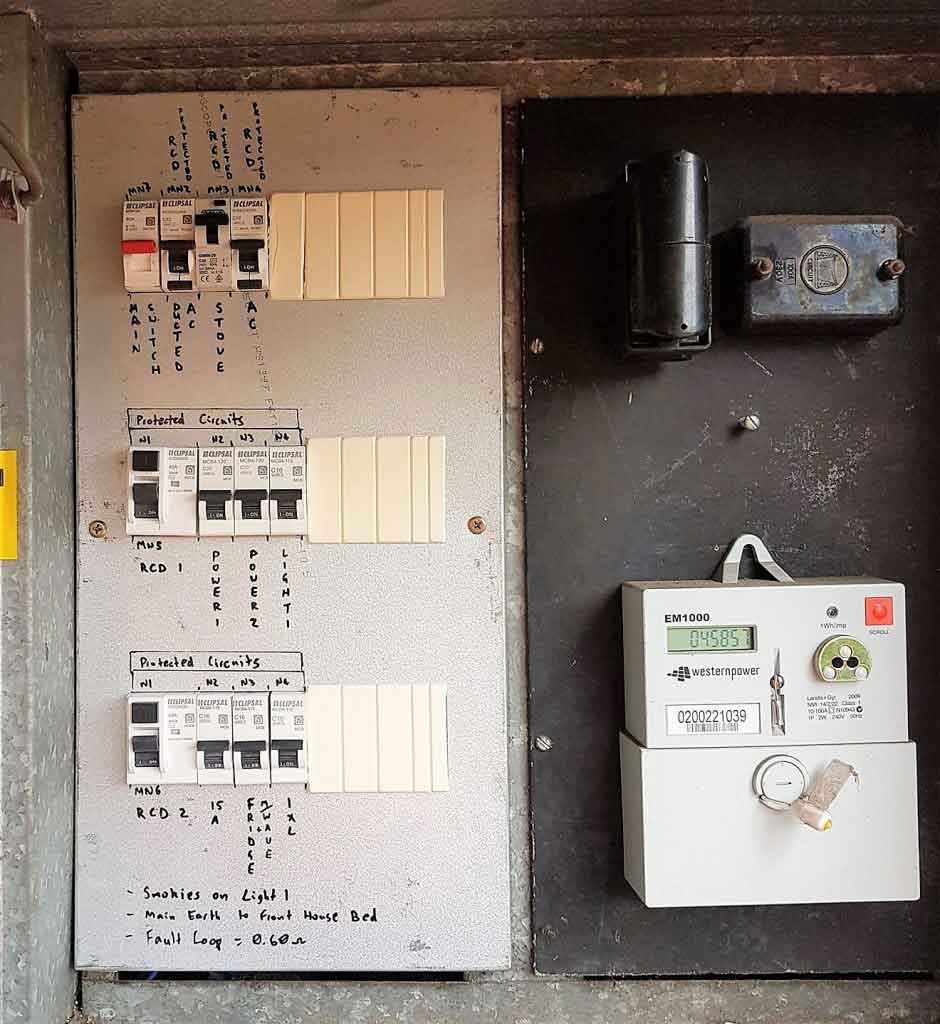
Before any charger goes on the wall, we inspect your switchboard. A 7.4kW single-phase charger draws up to 32 amps continuously, so the board needs spare capacity, a suitable main switch, and space for a new circuit breaker. If the board is older or already near capacity, a switchboard upgrade is done as part of the same job.
This is the step that gets skipped with cheap installs, and it's the one that prevents overloaded cables and nuisance tripping down the track.
Single phase versus three phase
Most Wanneroo homes have a single-phase supply, which suits a 7.4kW charger perfectly and covers the daily charging needs of the vast majority of EV owners. Three-phase supply allows a 22kW charger, which only benefits vehicles with an onboard three-phase charger — worth discussing if you have a commercial vehicle or a large battery EV.
We'll confirm your supply during the site visit and recommend the right charger rating rather than upselling hardware you can't fully use.
Placement and cable runs
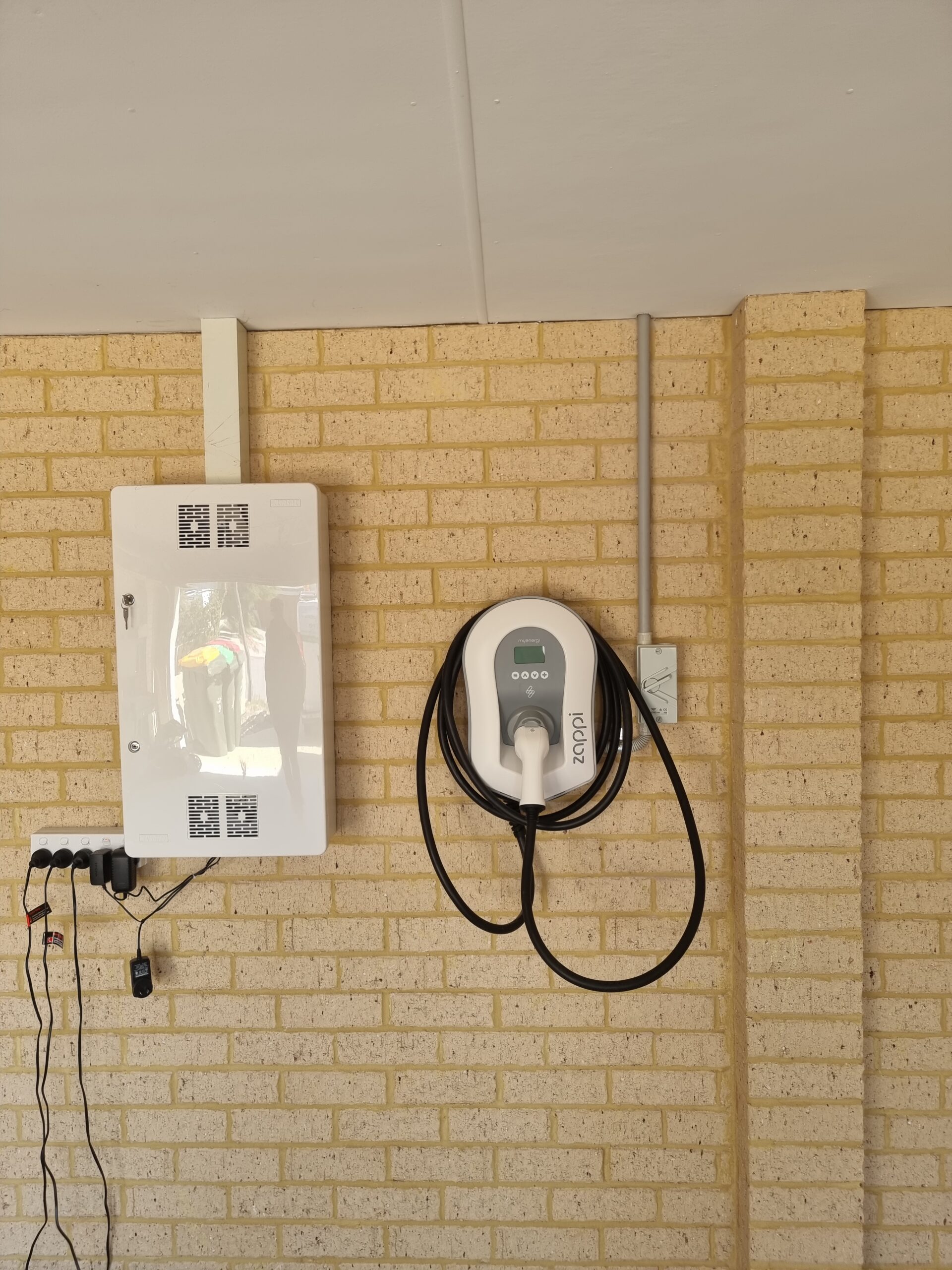
Charger placement matters for daily convenience and for keeping the cable run short and concealed. We mount the charger where you park, run the supply cable neatly through the roof space or wall cavity, and keep all cabling protected and out of sight.
A tidy, well-planned install means no trailing cables across the garage floor and no exposed conduit running down external walls.
Solar integration and smart charging
If you have rooftop solar, a charger like the Myenergi Zappi can prioritise surplus solar generation, so your car charges on free solar power during the day instead of drawing from the grid. Smart chargers also allow scheduling to take advantage of off-peak tariffs.
We install and commission the charger's app so you can monitor and schedule charging from your phone, and we walk you through how it works before we leave.
What determines the cost
The main variables are the switchboard's current condition, the distance from the board to the charger location, whether single or three phase is being used, and the charger model itself. Because every install is different, we provide a free written quote after a quick site assessment so you know the full cost upfront — no surprises.
Need this done properly by a licensed electrician?
Get honest advice and a free written quote from the EcoPower team in Wanneroo.